
Pitra Dosh Puja Trimbakeshwar Temple Pandit
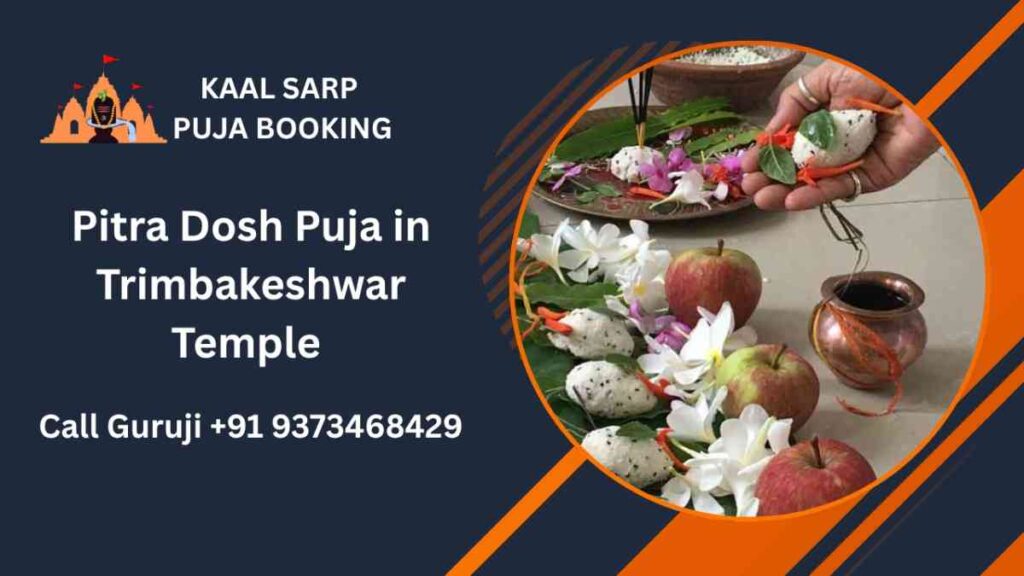
Ancestors are never really regarded as dead in Hindu society. It is said that they will continue to keep an eye on their offspring, bestowing wealth, health, and happiness upon them when they are properly honored and erecting barriers when their ceremonies are not fulfilled or their souls remain troubled. Hindu families have been doing Pitru Paksha, Shraddha, and Tarpan rituals for generations because of this deeply held conviction. According to the scriptures, each person is born with three debts: Pitru Rin (debt to one’s ancestors), Rishi Rin (due to the sages), and Deva Rin (debt to the gods). It is said that neglecting Pitru Rin might bring Pitra Dosh, or hardship, into a family’s life.
Pitra Dosh is defined as the negative energy or unresolved karma that results from improper rites for ancestors, sudden or unexpected deaths of family members, or years of disregard of the traditional Shraddha ceremonies. This is seen as an imbalance rather than a punishment, a gentle reminder from the ancestors that something is still lacking. According to Hindu tradition, the surviving family finds fresh harmony and the departed souls find solace when this imbalance is rectified through earnest ceremony.
Pitra Dosh Nivaran Puja, to put it simply, is the spiritual treatment used to relieve the restlessness of ancestor souls and remove any barriers that their unrest may be creating for their descendants.
Who Should Perform Pitra Dosh Puja and Why?
Pitru Dosha in the Kundali is likely to be the cause if you are among those who are constantly dealing with issues in your life. You may now simply check Pitra Dosha online to double-check any doubts, or you can get free horoscope checks from Pandit Prasad Joshi Guruji. In astrology, Pitra Dosha is always present. Therefore, doing the pitru dosha navarana puja at Trimbakeshwar helps you find serenity and contentment in life while providing rapid relief from regular problems.
Pitra Dosh Puja should not be performed out of fear or superstition, nor is it appropriate for everyone. It is especially advised for people and families who observe persistent patterns of difficulty that do not seem to have a clear explanation in the outside world. This comprises:
- Families that lost an ancestor to suicide, an accident, or another unexpected and unnatural cause, as these deaths are thought to leave the spirit restless and without the fulfillment it required before departing.
- People who, despite their sincere efforts and abilities, encounter recurring challenges in their careers or businesses—delays, unexpected setbacks, or possibilities that frequently disappear at the last minute.
- Many astrologers attribute long-term infertility, recurrent miscarriages, or unexplained health problems in children to unresolved ancestral karma.
- Families that have regular arguments, a lack of harmony, or an overall feeling of instability in the home without a clear external cause.
- Anyone who has seen Pitra Dosh signals in their birth chart—which are usually associated with particular planetary placements involving the Sun and Rahu—after consulting an experienced astrologer.
- descendants of a family where there is a gap in the traditional rituals owed to the ancestors due to inconsistent performance of Shraddha or Tarpan rites.
- This puja is performed because it is believed that once the debt owed to one’s ancestors (Pitru Rin) is recognized and paid back through appropriate ritual, the family’s restlessness subsides and the ancestors’ blessings start to flow freely once more, restoring stability.
Best Place to Perform Pitra Dosh Puja
The Pitra Dosh Puja at Trimbakeshwar Temple in Nashik, Maharashtra, is without a doubt the greatest location for Pitra Dosh Puja. One of Lord Shiva’s twelve jyotirlingas, the Trimbakeshwar temple is regarded as the best location. It is also well-known throughout India for doing numerous other poojas, including Pitru Dosh Puja, Narayan Nagbali Puja, and Kaal Sarp Dosh Puja.
Trimbakeshwar has a special place among them. In addition to being a Jyotirlinga, it is the source of the Godavari River, one of the holiest rivers in India. Generations of Vedic scholars have considered Trimbakeshwar Temple to be particularly Famous for ancestral rituals, Pitru Dosh remedies, and related pujas like Narayan Nagbali Puja, Kaal Sarp Dosh Puja and Tripindi Shraddha because of this unique combination: the presence of Lord Shiva himself in Jyotirlinga form, along with the purity of a river’s very source.
Therefore, get in touch with Pandit Prasad Joshi Guruji if you intend to perform Pitra Dosh Puja in Trimbakeshwar. With over 35+ years of expertise executing Vedic rites, Guruji is one of the most reputable and skilled pandits at Trimbakeshwar Temple. He assists devotees in finding relief from pitru Dosh and other family issues while performing the puja in accordance with the correct Vedic vidhi.
Benefits of Doing Pitra Dosh Puja
The Pitru Dosha pooja is brimming with a number of personal as well as spiritual benefits. It is also considered one of the most powerful pitra dosha remedies as per the Vedas. Further, if this pitra dosha puja in Trimbakeshwar is performed under Pandit Prasad Joshi Guruji, you may experience the positive changes very fast.
Some of its main benefits are:
- In many lives, unseen challenges often hold us back whether it’s unresolved pasts, slow progress in careers, or personal struggles. This act not only heals the past but also clears long-standing obstacles that affect career growth, business success, and financial stability.
- Marriage and family life can also face delays and difficulties. Support for couples struggling with conception or those facing recurring conflicts within the household is part of this healing journey. Restoring harmony in the family brings mental peace and eases unexplained anxiety or fear.
- Beyond immediate relief, this process strengthens the blessings and protective influence of ancestors for future generations. It helps clear karmic blockages that other remedies might miss, encouraging a renewed sense of gratitude and connection to one’s family roots. When performed sincerely, it is believed to open the door to lasting prosperity and stability.
- Ultimately, this tradition offers a pathway to peace, growth, and deeper family bonds transforming obstacles into opportunities for a brighter future.
When Should I Perform This Puja?
Although Pitra Dosh Nivaran Puja can theoretically be performed on a number of fortunate days throughout the year, some times of year are thought to be much more successful and are customarily advised for this particular ritual.
The most important window is Pitru Paksha, which occurs during the Krishna Paksha in the Hindu month of Ashwin and is a fortnight devoted solely to ancestors. Since it is thought that the souls of ancestors are particularly open to the gifts and prayers of their descendants during these sixteen days, it is seen to be the most potent time to carry out any ancestral rite.
In addition to Pitru Paksha, Amavasya (no-moon) days throughout the year are also thought to be advantageous for this puja because Amavasya is customarily connected to ancestor spirits. Shraddha and Pitra Dosh remedies can be performed outside of the Pitru Paksha window during some Hindu months, especially Magh, Falgun, and Kartik.
Sarva Pitru Amavasya, the last day of Pitru Paksha, is thought to be the most comprehensive day to carry out the ritual if a family is unsure of the precise date of an ancestor’s passing or wants to address the doshas of several ancestors at once.
To check for days or dates suitable according to your Kundli, you may consult Pandit Prasad Joshi Guruji, as he would thoroughly check your horoscope and tell the best muhurat for your Puja.
Call Guruji at +91 9373468429 to book your puja date or know the best time to do so.
Pitra Dosh Puja in Trimbakeshwar
Few places in India can compare to the significance of doing Pitra Dosh Nivaran Puja at Trimbakeshwar. The presence of Lord Shiva in his dazzling form, one of the twelve Jyotirlingas, is thought to enhance the impact of any ritual carried out here, including ancestral ceremonies. Another level of sacredness is added by the temple’s closeness to the Godavari River’s source, where river water is thought to be unusually pure for ceremonial purposes.
The puja is conducted according to a conventional Vedic framework under the direction of Pandit Prasad Joshi Guruji. Usually, it starts with a Kundali Reading, in which Pitra Dosh’s presence is verified and the best date and technique for each family are determined by looking at the birth chart. Sankalp comes next, in which the devotee makes a solemn pledge in front of the deity, naming the ancestors being honored and explaining the objective of the rite.
The two main rites that follow are Pind Daan, where symbolic sacrifices are presented to symbolize nutrition and closure for the departed, and Tarpan, when water combined with sacred substances is offered to appease the ancestral souls. Additional ceremonies, like Narayan Nagbali or Tripindi Shraddha, may be advised depending on the particular circumstances of the family, such as when an early death occurs or when ancestral traditions have been neglected for several generations.
All these steps are carefully managed by Pandit Prasad Joshi Guruji to ensure that the puja gives the best results.
Samagri for Pitra Dosh Pooja
The officiating pandit arranges most of the ritual objects needed for Pitra Dosh Puja, although it is helpful to know what usually goes into the ceremony:
- Holy water and kalash (sacred pot), frequently from the Godavari
- For Tarpan, black sesame seeds (til)
- Sesame, barley, and rice for Pind Daan offerings
- The majority of Vedic ancestor rites employ darbha grass.
- Garlands, bel leaves, and fresh flowers
- Betel leaves, coconuts, and fruits
- Items for the Havan (fire ritual), ghee, and camphor
- New clothes and a white cloth for the devotee
- When appropriate, sacred thread (janeu)
- Puja thali with necessary ingredients and incense sticks
The All of this samagri is scheduled in advance for families who book through Guruji, so you will not need to do any preparation, you will just be told what personal belongings, if any, to bring.
What Are the Types of Pitra Dosh Puja?
Because Pitra Dosh manifests differently in each horoscope, the cure is particular to the type of dosh that was found.
Shraddha Puja is a customary annual or recurring ceremony that is usually advised during Pitru Paksha in order to honor and grant peace to ancestors.
Narayan Nagbali Puja, a more complex three-day ceremony that combines Narayan Bali (for the restless soul) and Nagbali (atonement connected to harming a snake), is especially advised when a family member has died due to unnatural or untimely causes.
Tripindi Shraddha is performed when it is difficult to perform ordinary Shraddha because the rites of three generations of ancestors have not been completed or when the precise date of an ancestor’s death is uncertain.
Pitra Shanti Puja is a more broad peace-invoking ceremony that is advised when the family is being affected by ancestral karma in subtler, continuous ways as opposed to through a single incident.
Since administering the incorrect kind of treatment rarely results in the desired relief, a trained panditji would usually examine your horoscope and family history before determining which of these applies to your particular condition.
What Is the Cost of Performing Pitra Dosh Puja in Trimbakeshwar?
Pitra Dosh Nivaran Puja costs vary depending on the size of the ritual, the samagri utilized, and whether it is done separately or as part of a group celebration. The Seperate individual Pitra Dosh Nivaran Puja at Pandit Prasad Joshi Guruji’s service costs ₹2,100 and includes all necessary ritual and samagri.
For the exact Pitru Dosha pooja cost, you can directly contact Guruji on +91 9373468429
You can also book Pitra Dosh Puja online in advance if you are travelling from another city or country.
Pitra Dosh Puja Dates 2026
Here are the important Pitra Dosh Puja Dates in 2026
- On every Amavasy, i.e, New moon day
- Pitru Paksha (September 2026)
- Mahalaya Amavasya
- Somvati Amavasya
These days can be considered perfect for performing Pitru Dosha Nirvana Puja at Trimbakeshwar Temple. Contact Guruji for the exact Muhurat and booking.
Best Pandit for Pitra Shanti Pooja
Selecting the appropriate pandit is just as important as selecting the appropriate puja. With a focus on Pitra Dosh Nivaran, Narayan Nagbali, and Tripindi Shraddha pujas, Pandit Prasad Joshi Guruji brings years of devoted 35+ Years of experience performing Pitra dosh Nivaran Puja at the Trimbakeshwar Jyotirlinga.
Why Guruji should be chosen for each Pooja:
- provides knowledgeable advice and is well-versed in all Vedic rites.
- has almost 35+ years of experience.
- simplifies and eases the ceremonial process.
- guarantees a tranquil and fulfilling puja experience
- offers each devotee a complimentary horoscope check.
- Call +91 9373468429 at any time.
- provides total assistance from start to finish
- offers reasonably priced puja packages
The distinction frequently comes down to trust, openness, and sincere spiritual care all of which Guruji has established a reputation for through years of assisting families in achieving enduring peace for families who feel overpowered by the quantity of pandits providing comparable services throughout Trimbakeshwar.
Conclusion
Pitra Dosh Puja is a religious ritual that is widely used to eliminate negative energies from your life and establish a connection with your ancestors. For performing such a puja and obtaining blessings for the whole family, the Trimbakeshwar temple may be the most divine location. Furthermore, the experience is made even more divine, fulfilling, and reliable by Pandit Prasad Joshi Guruji’s instruction.
For serenity, prosperity, and heavenly blessings at Trimbakeshwar Temple, call Pandit Prasad Joshi Guruji at +91 9373468429.